


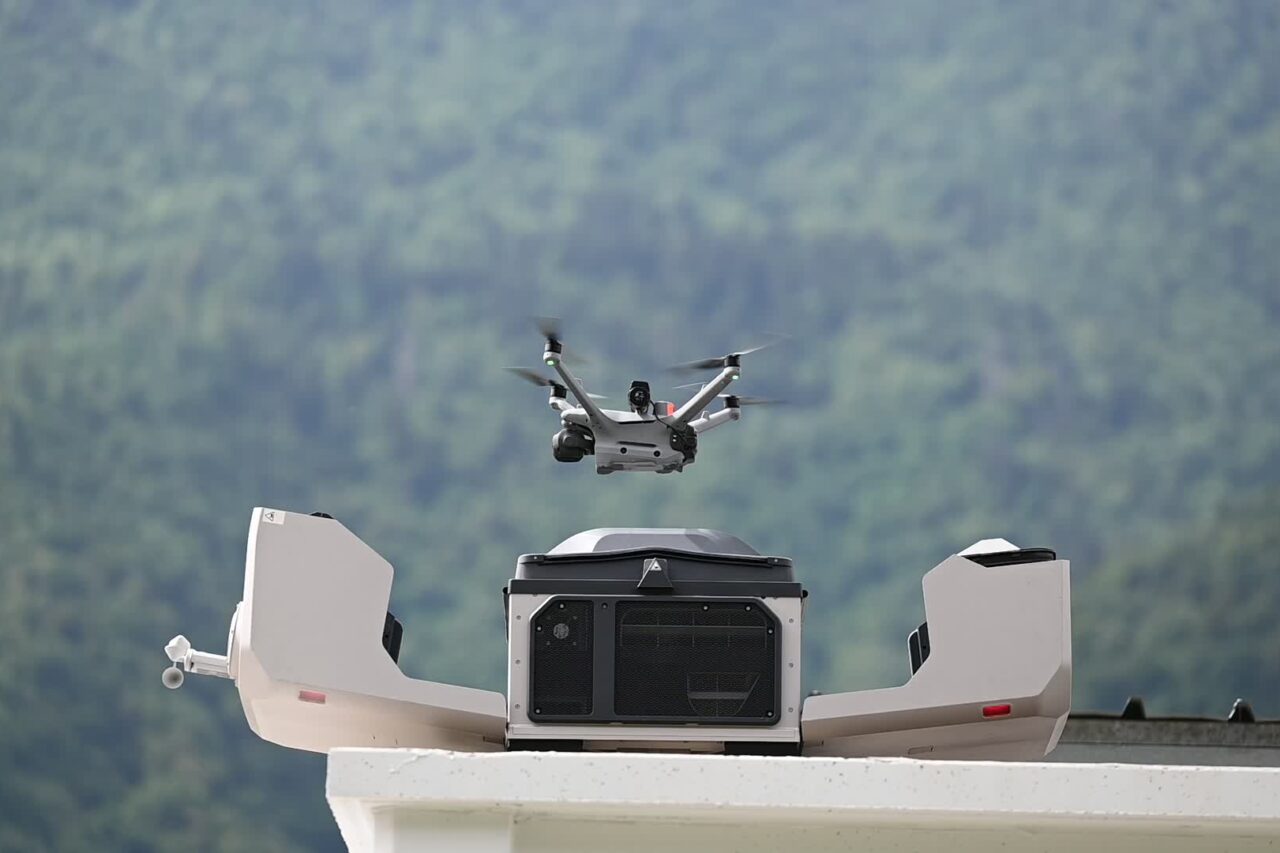
Dock stations: how they work and what their main advantages are
The docking station is an automated base for housing and recharging the drone, installed directly at the site to be monitored. The drone remains operational within the station and recharges automatically between missions, ensuring it is always ready for take-off without requiring the physical presence of an operator on site.
Once the system has been configured, it is possible to schedule regular missions or initiate flights on demand, for example to meet specific operational requirements or to promptly assess unforeseen situations.
The drone takes off automatically from the base, follows the predefined route and captures images in the visible and thermal spectrums. Once the mission is complete, it returns autonomously to the docking station, where it is recharged in preparation for the next flight.
The data collected is transmitted to the SkySight platform, which processes it and makes it available for analysis and report generation. The entire process, from flight planning to the delivery of information, can thus be managed remotely, ensuring operational continuity and minimising the need for on-site intervention.
Authorisation process and supervision
Installing the system is only part of the process: in order to operate, it is necessary to comply with the requirements set out in current legislation and obtain the relevant authorisations from ENAC. Each mission is also supervised by a qualified remote pilot, who monitors operations from the control room.
SkySight manages the entire process, handling both the authorisation and regulatory aspects as well as the operational supervision of the flights. The client can therefore make use of the service without having to deal personally with the administrative procedures and tasks associated with mission management.
The main advantages of the dock
- 24/7 remote operation, thanks to continuous monitoring from the control room.
- Repeatable and comparable data over time, essential for monitoring and historical analysis.
- Greater safety, particularly during inspections in areas that are difficult to access or potentially hazardous.
- Continuous monitoring, enabling the prompt detection of any anomalies.
- Integration with existing systems, thanks to the ability to transfer SkySight data into the management and reporting workflows already used by the client.
The result is a service managed entirely by SkySight, from the installation of the dock and the supervision of flights right through to data processing, enabling the client to receive up-to-date, accurate and comparable information about their site without having to deal with the operational and authorisation aspects associated with drone use.
The dock’s applications
SkySight offers a range of services based on the use of the dock, which can also be combined at the same site. A single station can, for example, monitor progress on a building site during the day and assist with surveillance of the area at night.
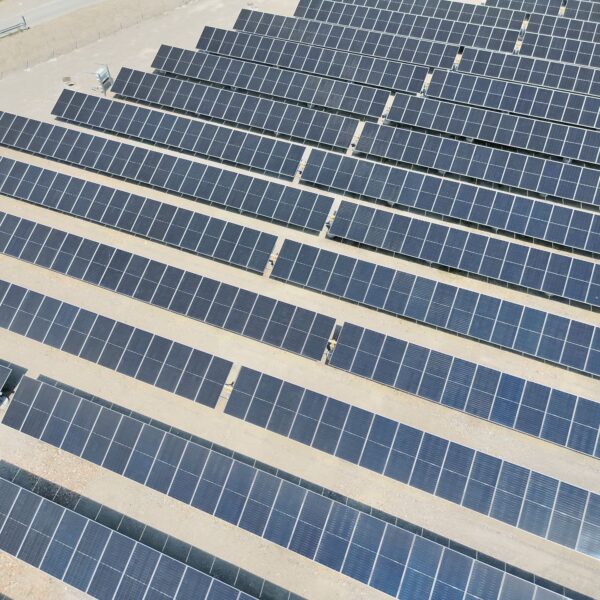
Thermographic inspection of photovoltaic systems
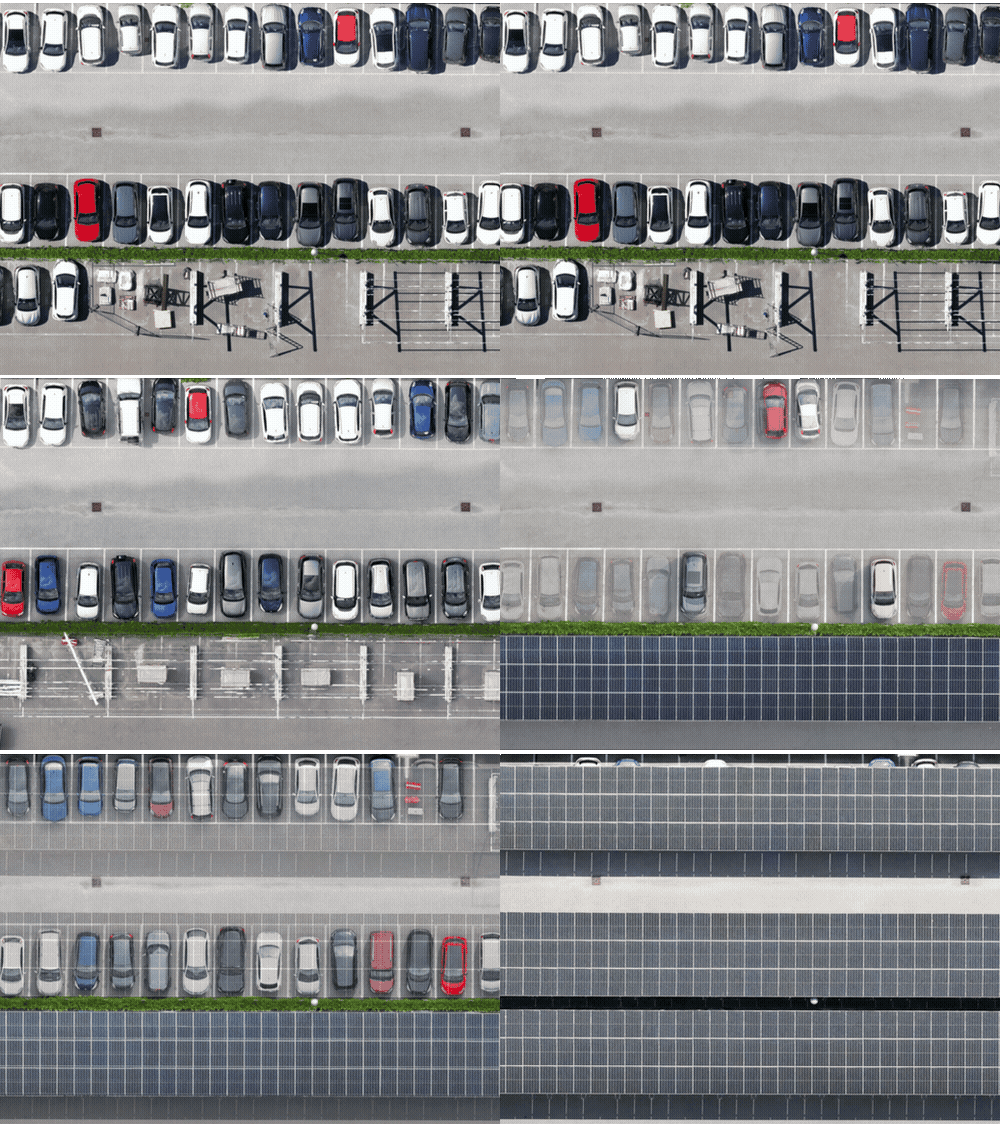
Thermographic inspections are carried out on photovoltaic systems using drones fitted with high-resolution optical and thermal sensors, identifying hotspots, damaged cells and other anomalies not visible to the naked eye. The technical reports, which comply with the IEC TS 62446-3:2017 standard, support preventive maintenance, asset management and insurance procedures. The drone proves particularly useful for large installations, where a full inspection would otherwise take several days to complete and where even a small percentage of faults has a significant impact on the profits generated.
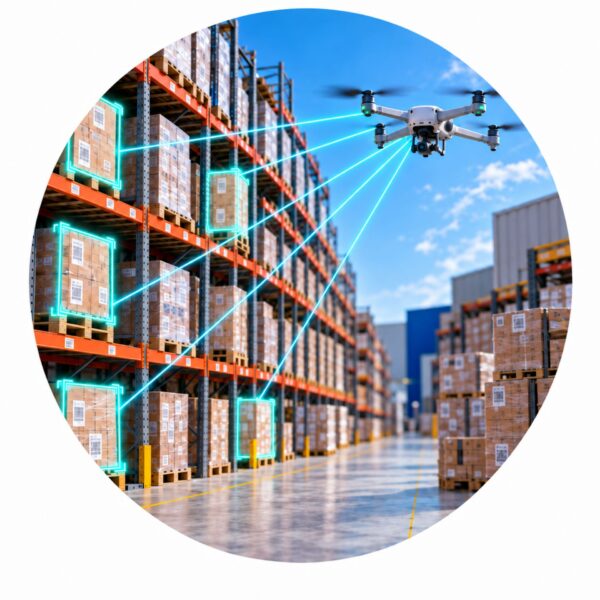
Inventory of logistics areas
Logistics area monitoring automatically identifies stored materials by counting and locating the assets present, thereby supporting inventory management and the tracking of movements, whilst reducing errors associated with manual counts on what are often extensive yards. The stock take can be repeated on a daily or weekly basis without the need for staff to physically walk the area, providing up-to-date and comparable data to reconcile actual stock levels with warehouse management systems.
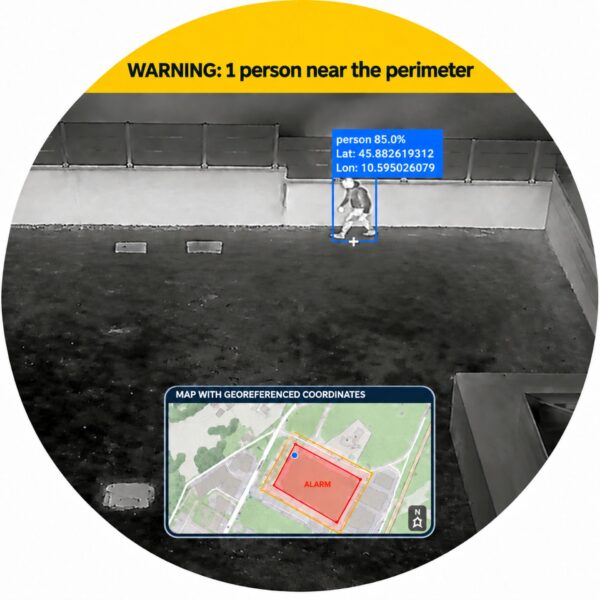
AI monitoring for security
AI-powered security monitoring keeps watch over sensitive sites, areas and assets through scheduled or event-triggered flights, analysing the images captured using artificial intelligence algorithms capable of recognising intrusions, unauthorised presence or anomalous situations, and integrating with the video surveillance systems already in place on site. The drone takes off in less than 90 seconds after an event is detected, providing a visual aerial assessment of the affected area within minutes: a clear and immediate overview of the situation, which is useful for coordinating more effectively with the police.
Volumetric estimate
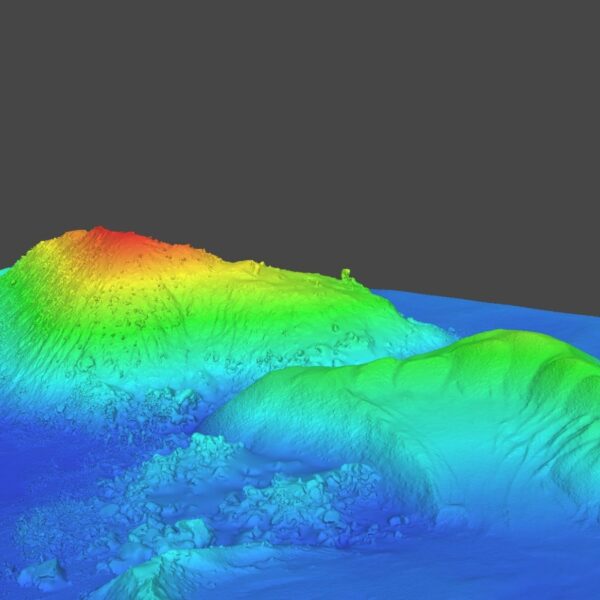
Volumetric estimation of stockpiles and bulk materials calculates the volume of material present at a given moment or the change between two successive measurements, providing accurate, reliable and repeatable data. It is used in quarries and mining operations, waste management, bulk material depots and steelworks with ferrous scrap storage areas.
Thanks to the dock, these measurements are carried out at regular intervals without the need to deploy an operator each time, providing data that is always up to date and comparable over time for production accounting, stock reconciliation and the valuation of inventory on the balance sheet.
Inspection of hydrogen facilities
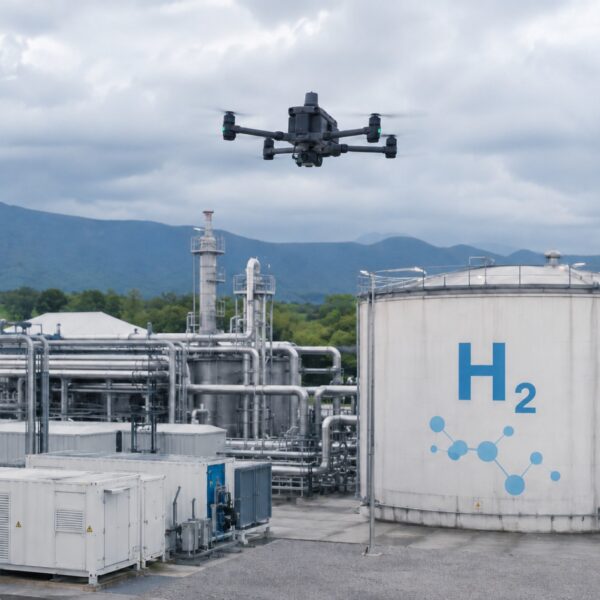
Facilities for the production of green hydrogen include electrolysers, compressors, storage tanks and pipework networks, which require frequent inspections to promptly detect leaks, thermal anomalies or structural failures, often in areas that are difficult to access or subject to safety restrictions. Drones make it possible to inspect this infrastructure and its associated energy subsystems without exposing staff to risks associated with flammable gases or pressurised components.
Site monitoring
Monitoring construction sites through regular aerial surveys makes it possible to document the progress of the works and to visually compare the various stages over time, providing project management, clients and contractors with an objective basis for operational monitoring, progress reporting and the handling of any disputes.
An integrated solution for remote monitoring
The value of the dock therefore lies not only in flight automation, but in the ability to transform routine surveys into useful information to support operational and managerial decisions.