


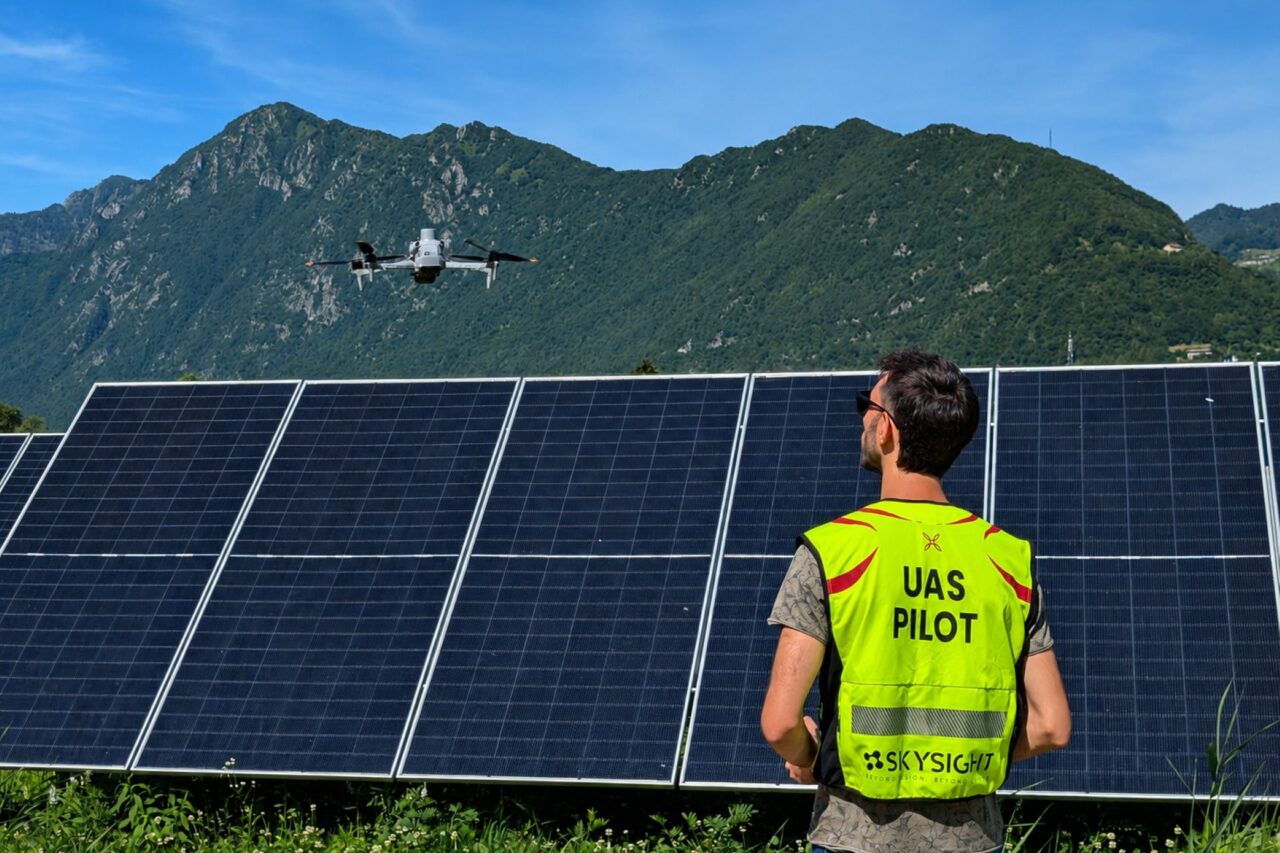
Identifying faults before they become a cost
A photovoltaic system may appear to be in perfect working order whilst, at the same time, harbouring critical issues that reduce its performance, reliability and asset value.
Hotspots, string faults, damaged modules, chipped panels, localised dirt or visible anomalies do not always come to light during an inspection carried out from the ground. In many cases, they only become apparent once they have already caused losses, required urgent repairs or complicated a valuation, maintenance work or an insurance claim. The question is not merely whether the system is generating energy. The question is: is it generating as much as it should, under the correct technical conditions and without any hidden defects?
With its thermographic inspection service for photovoltaic systems, SkySight carries out a drone-based thermographic inspection of photovoltaic systems to provide a technical, localised and actionable snapshot of the asset’s condition
Why carry out a thermographic inspection of a photovoltaic system?
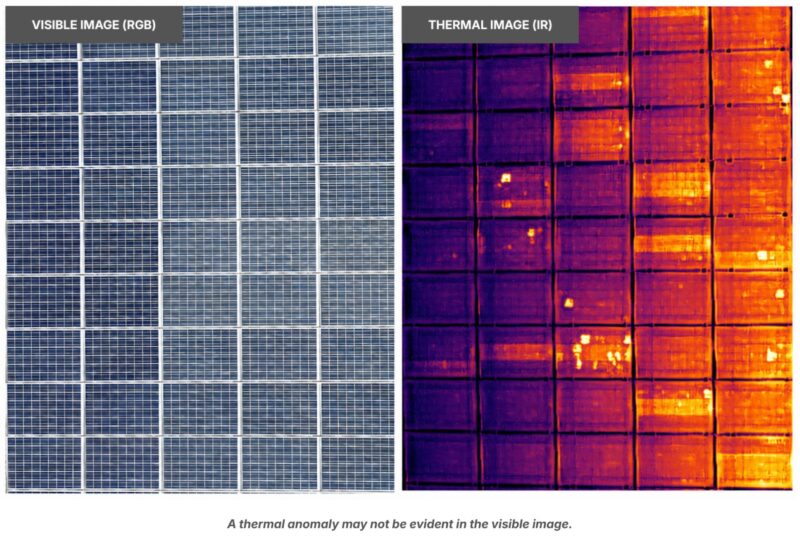
Thermographic inspection using drones makes it possible to analyse large areas of a photovoltaic system and identify potential thermal or visible anomalies without having to check each module manually. The aim is not simply to produce images from above, but to collect data that helps to determine where action is needed, which areas to inspect on site, and how to document the technical condition of the system.
This service can be useful for:
- planning maintenance work in a more targeted manner;
- verifying the technical condition of the system prior to purchases, disposals or due diligence;
- gathering evidence following weather events or suspected damage;
- supporting technical assessments and insurance-related activities;
- documenting anomalies and inspection priorities for O&M teams;
- building a technical history of inspections carried out over time.
What can drone-based thermal imaging detect in a photovoltaic system?
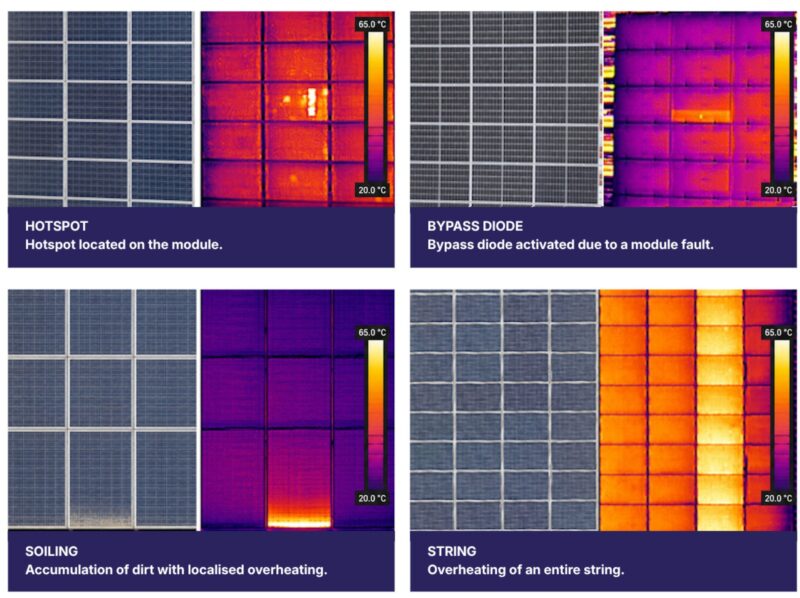
Thermal and visible images captured during a drone inspection help to identify and locate various types of anomalies, including:
- hotspots on photovoltaic panels;
- string faults;
- modules that are chipped, broken or have visible defects;
- soiling and dirt build-up;
- visible marks on modules, structures or parts of the system;
- areas requiring a more in-depth technical inspection on site.
Each finding is linked to its location on the system, the available images and the information needed to understand its technical context.
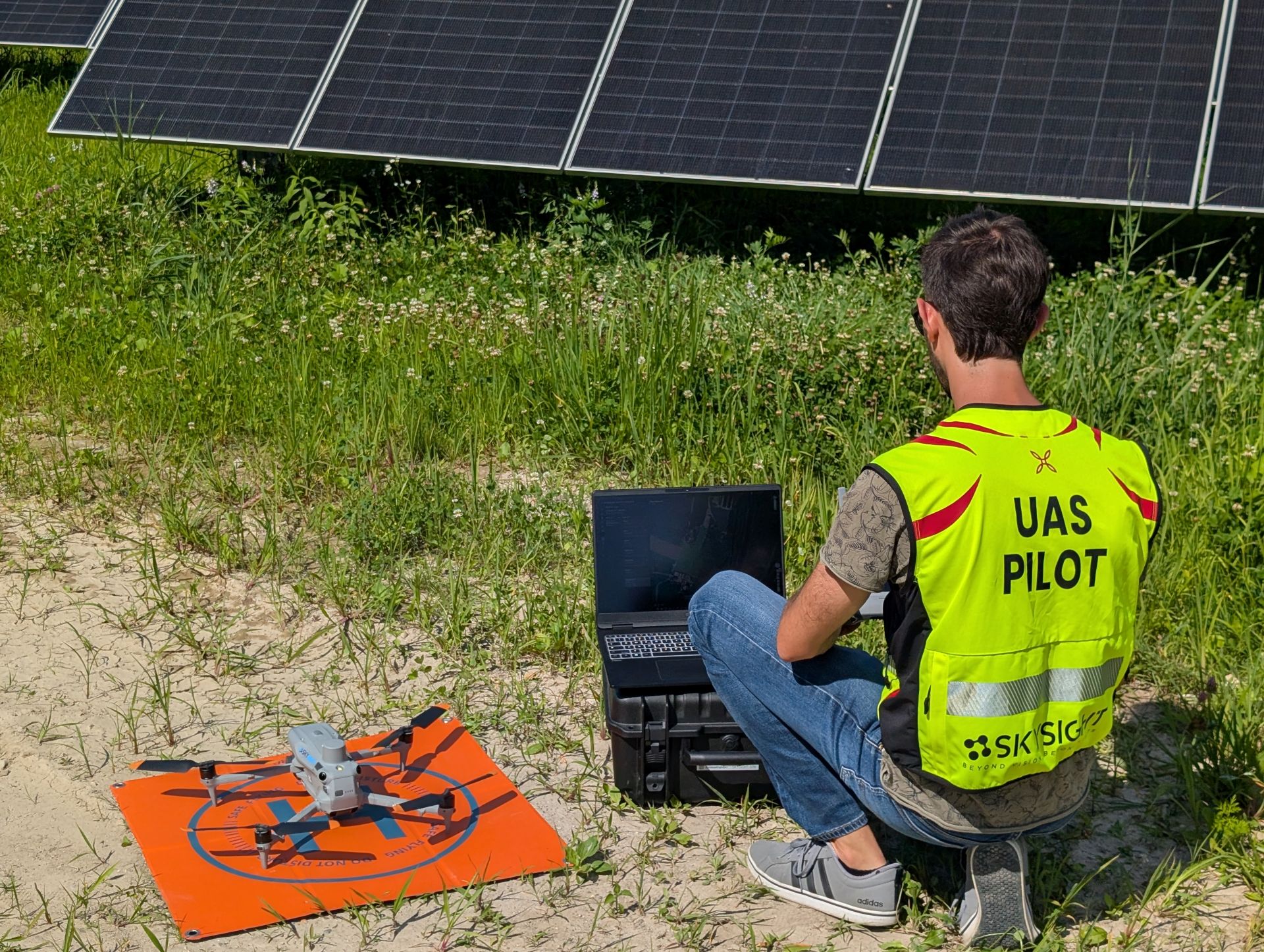
Drone inspections: it’s not just a flight
A reliable thermographic inspection is not simply a matter of using a drone fitted with a thermal imaging camera. To obtain results that are genuinely useful for maintenance, assessment or asset management, a number of technical and operational steps are required. International technical standards, such as IEC TS 62446-3:2017 for thermography on operational photovoltaic systems, also confirm the importance of appropriate survey conditions, correct procedures, clear reporting and specific expertise.
For this reason, every stage of the inspection must be carefully planned: from flight preparation and data collection through to image processing and the presentation of results.
With this approach, SkySight combines technical expertise, dedicated tools and operational procedures, including:
- Trained and qualified pilots for the planned operations and the plant’s operational context.
- Verification of authorisations and applicable conditions in the flight area, to plan the activity in a compliant and safe manner.
- Correct thermographic acquisition techniques, with attention to the conditions necessary to capture technically meaningful and usable images.
- Mission planning based on the plant’s configuration, solar radiation and environmental conditions.
- Specialised software for image processing, organising results and the automated detection of defects and anomalies.
- Technical expertise to interpret the data and translate it into a report useful for the maintenance team, the plant owner, the surveyor or the insurer.
This solution enables you to achieve operational results without having to manage specialist expertise, training, procedures or dedicated software tools in-house.
From the data to the technical report on the photovoltaic system
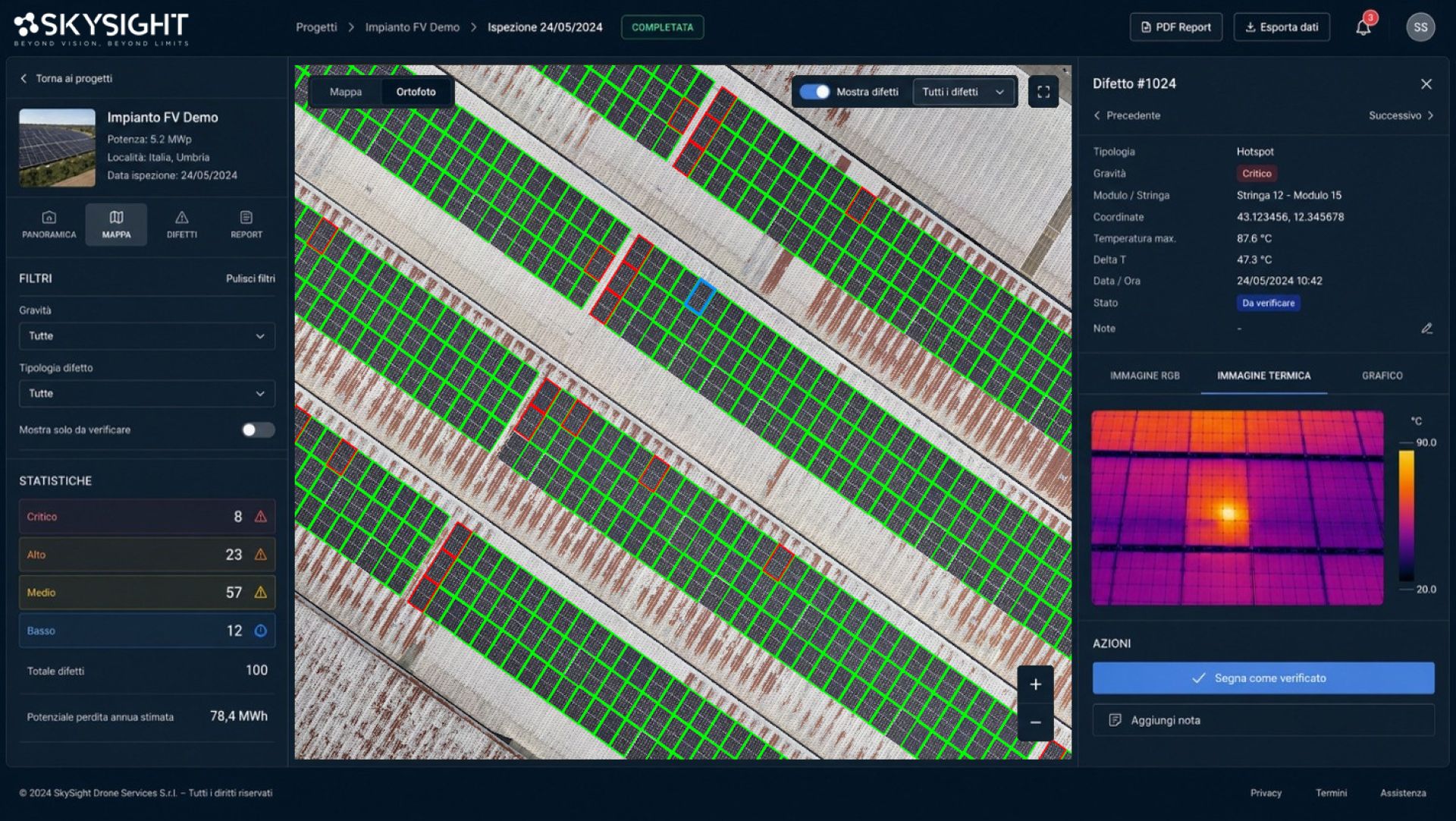
The value of thermography lies not only in its ability to detect a fault, but also in its ability to locate it, document it and make it useful to those responsible for technical or operational decisions. With the thermographic inspection service for photovoltaic systems, the data collected is organised into a structured technical report, which can be viewed both in PDF format and online via a web app. The report contains key information on the system analysed, including its location, configuration, installed capacity and operating conditions recorded at the time of the inspection.
The document includes a list of the faults identified, each of which is georeferenced and accompanied by coordinates, associated RGB and thermal images, and a classification by type and severity. For each anomaly, useful guidance is provided for on-site verification and the planning of remedial work.
The report may also include a section on statistical analysis summarising the number and distribution of defects by category, as well as an estimate of the potential production losses associated with the detected anomalies.
This enables a shift from general visual evidence to a concrete information base for planning inspections, maintenance and technical assessments.
Who is thermographic inspection of photovoltaic systems intended for?
Owners and asset managers of photovoltaic systems
A thermographic inspection provides a better understanding of the system’s actual condition, helps protect the asset’s value and provides technical data for planning investments or maintenance work.
Photovoltaic maintenance and O&M companies
Identifying anomalies helps to organise site visits and corrective actions with greater precision, reducing the time needed to pinpoint the areas requiring inspection.
Surveyors and technical consultants
Geolocated evidence, accompanied by thermal and visible images, can support inspections, due diligence, post-event checks and documented technical assessments.
Insurance companies and loss adjusters
A drone inspection can provide useful documentation for assessing the condition of the system, any damage and the need for further investigation, particularly following adverse weather events or incidents.
When to request a thermographic inspection using a drone
It is advisable to consider a drone-based thermographic inspection for photovoltaic systems when:
- no thermographic inspection has ever been carried out on the system;
- there are drops in performance or unexplained anomalies;
- severe weather events have occurred, such as hail, strong winds or other potentially damaging phenomena;
- extraordinary maintenance needs to be scheduled;
- you are buying, selling or evaluating a photovoltaic system;
- technical documentation needs to be prepared for a valuation or an insurance claim;
- you wish to build up a record of the asset’s technical condition.
A technical inspection to gain a better understanding of the condition of the system
A photovoltaic system can continue to generate energy whilst, at the same time, exhibiting faults or issues that require attention.
Using drones, thermography, visible-light imaging, automated analysis and technical reporting, SkySight enables the collection of data useful for identifying potential problems, pinpointing their location on the system and transforming this into actionable information to support maintenance, assessment or asset management.
To assess the condition of your photovoltaic system, you can request a drone-based thermographic inspection from SkySight, tailored to the characteristics of the asset and your technical requirements.